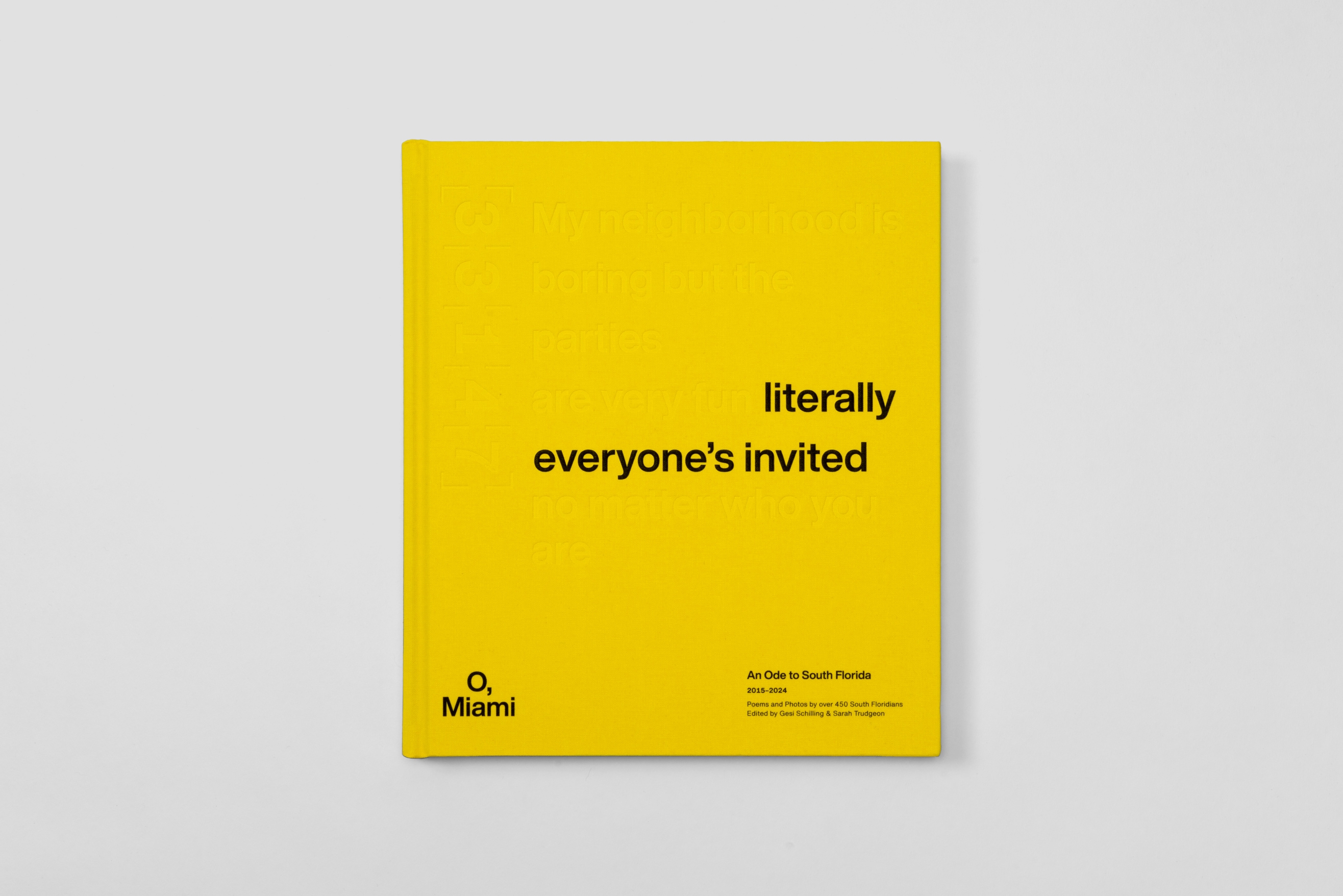
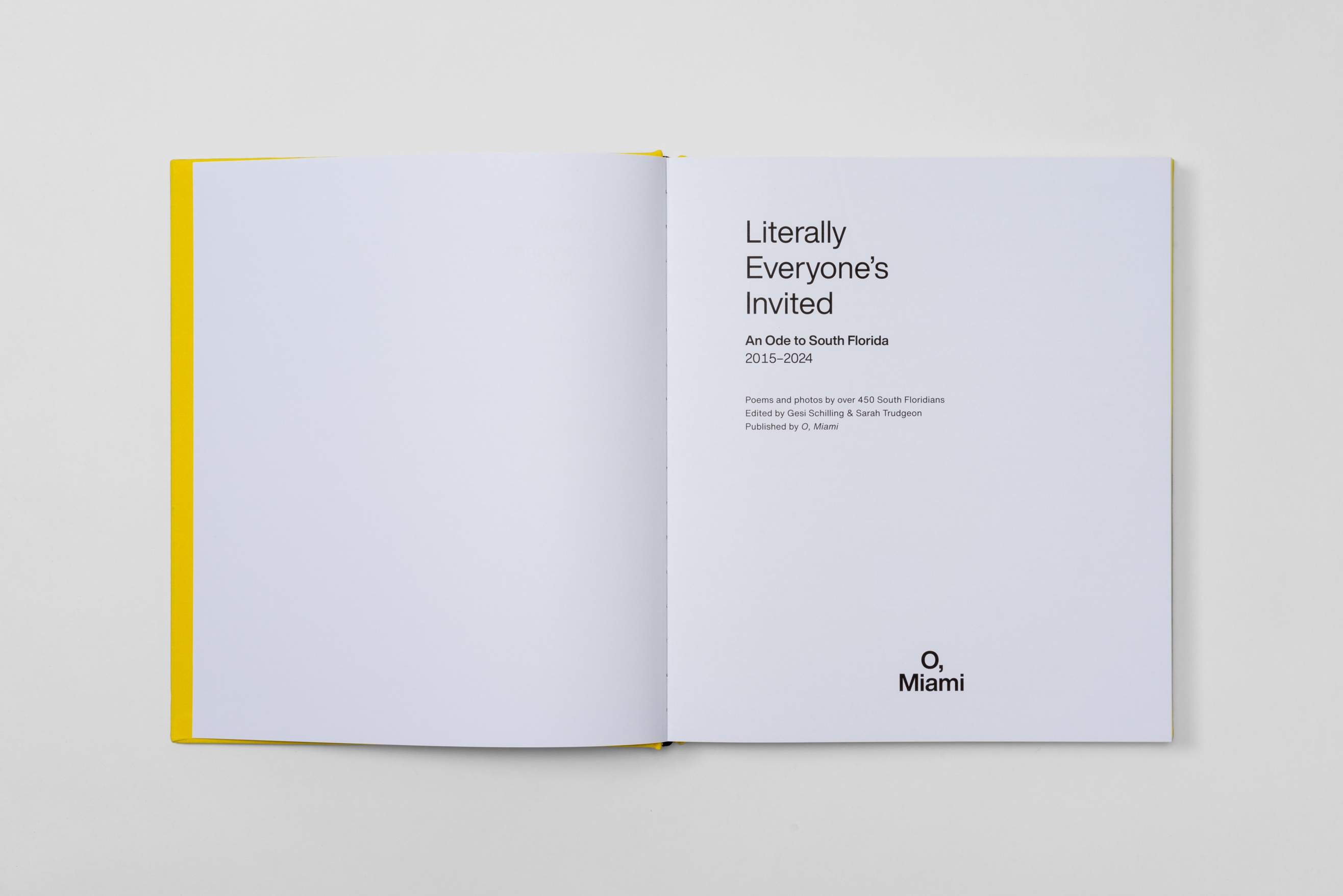
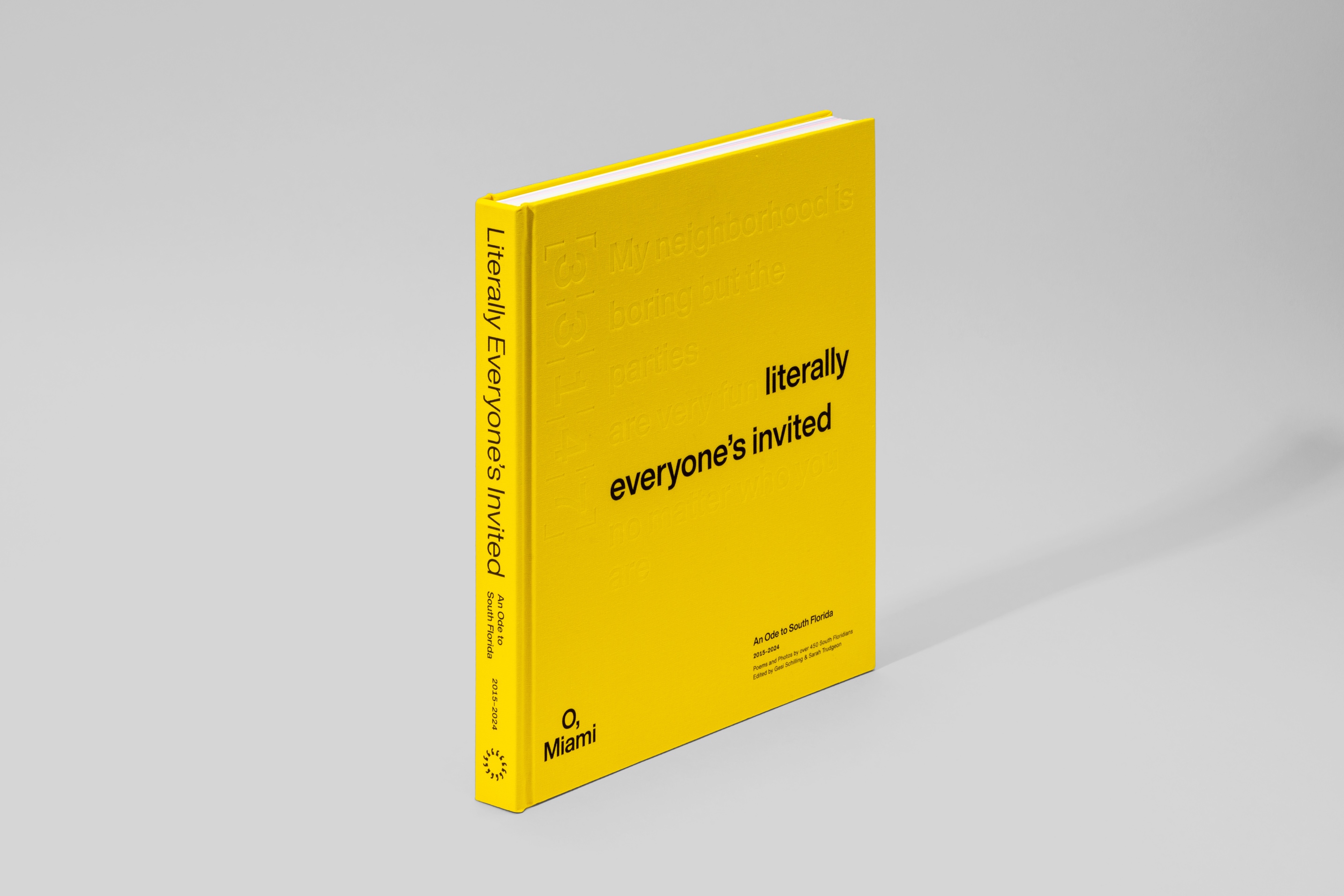
Literally Everyone’s Invited
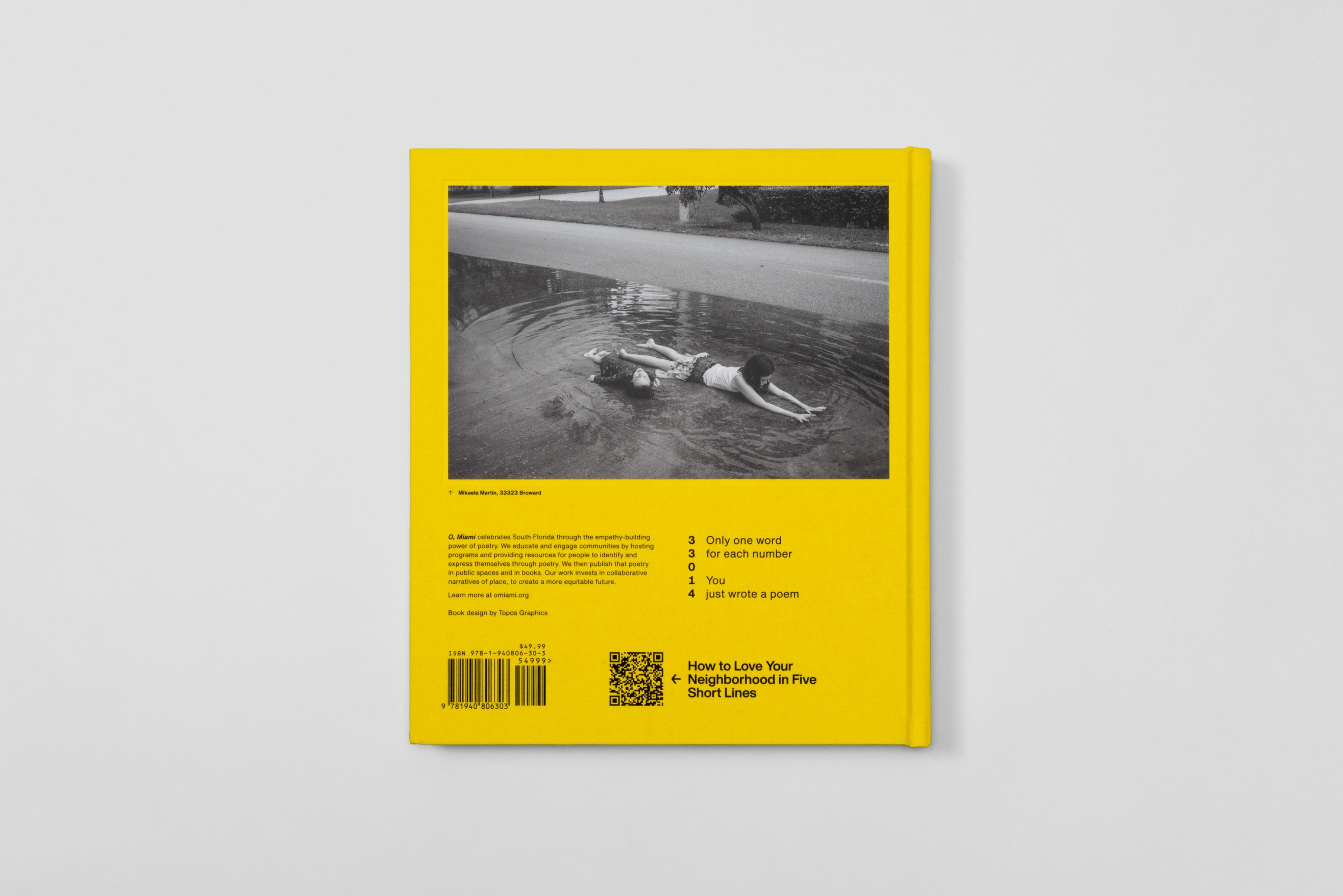
Literally Everyone’s Invited: An Ode to South Florida marks the tenth anniversary of the ZipOde — a place-based poetic form invented in 2015 by O, Miami in partnership with WLRN. Edited by Gesi Schilling and Sarah Trudgeon, the collection brings together poems and photographs by over 450 South Floridians across every zip code in the region. Part art book, part love letter, it is a portrait of a community written by the people who live it.
This was a winner of the AIGA 50 Books | 50 Covers 2023
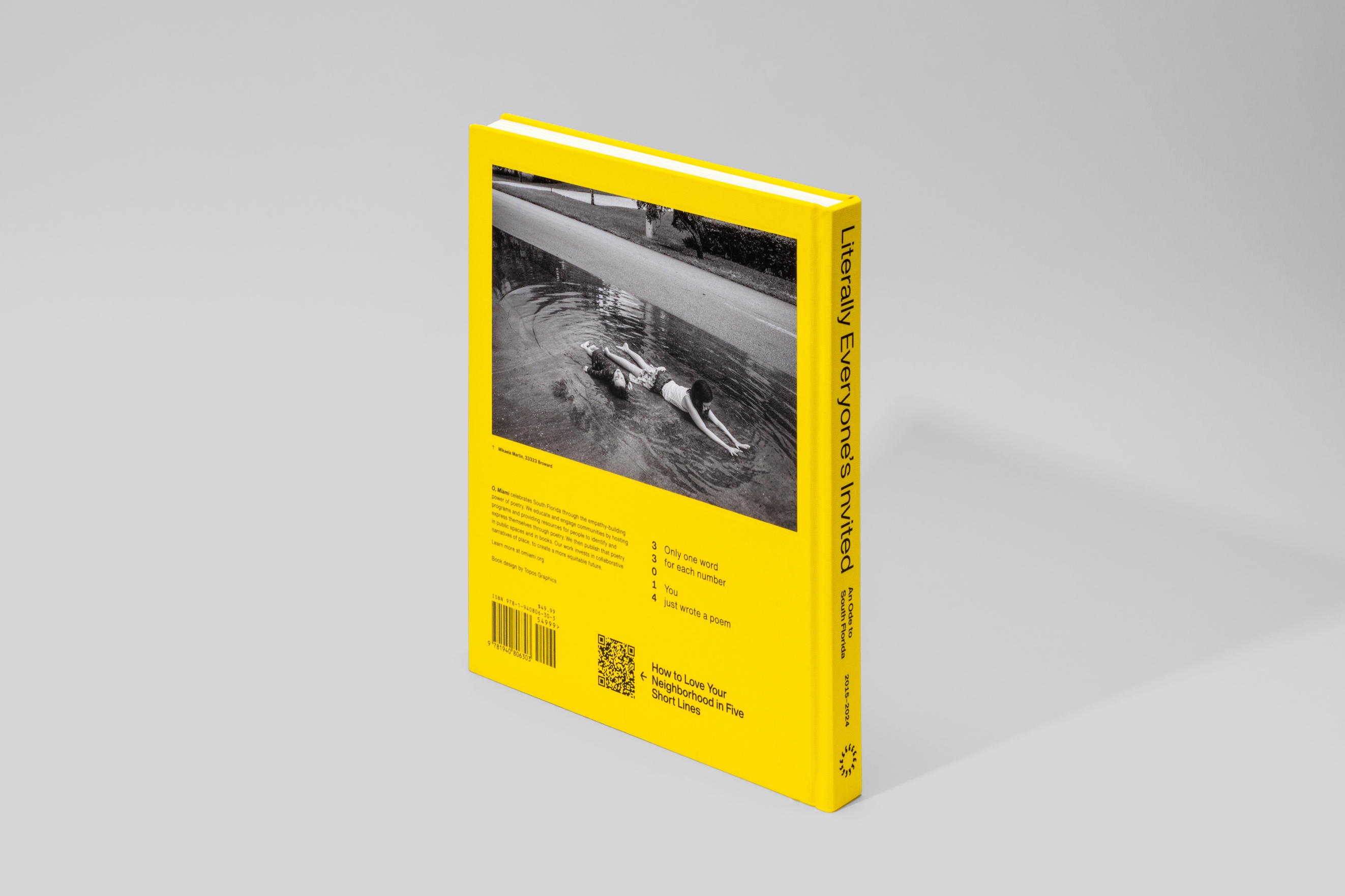
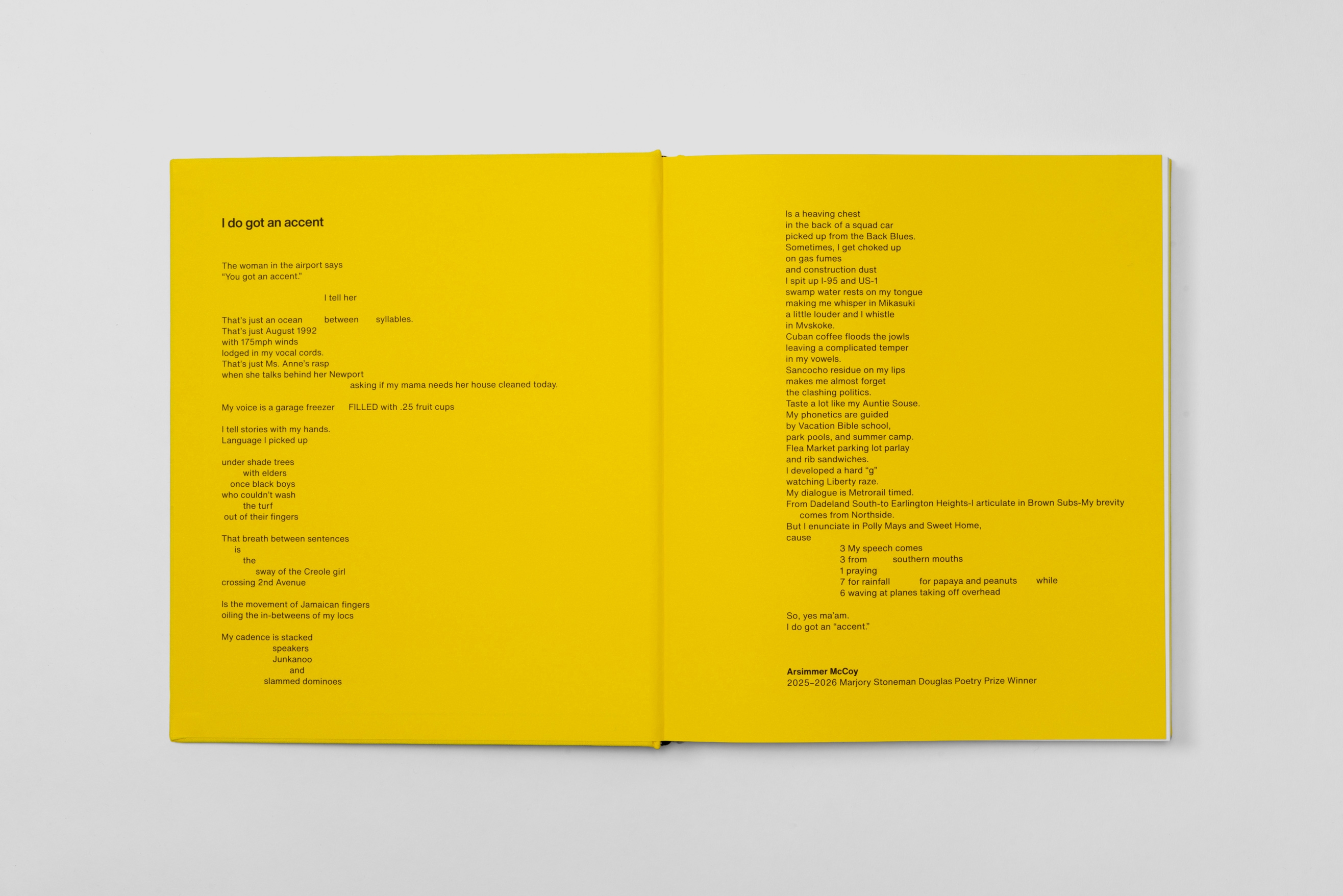
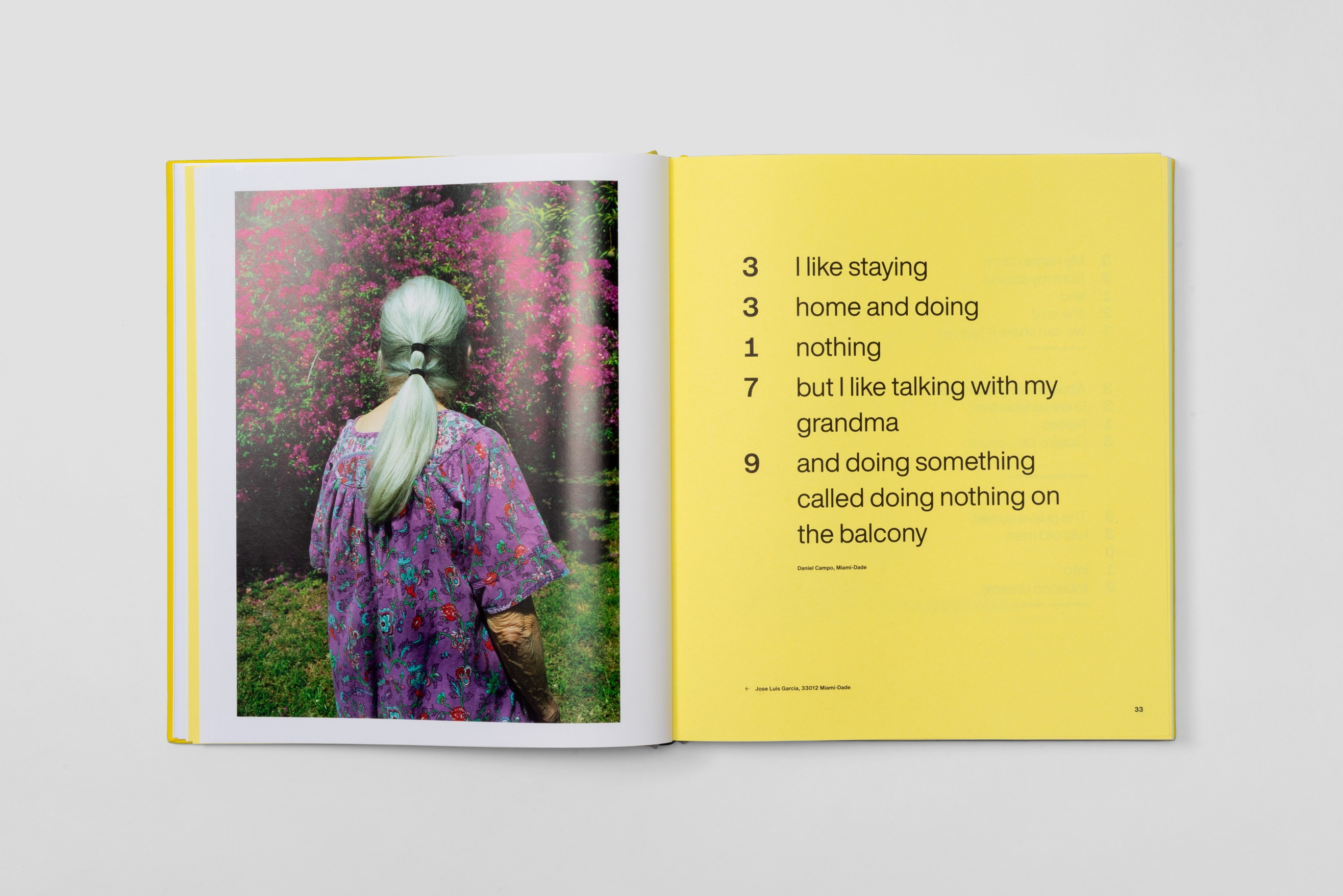
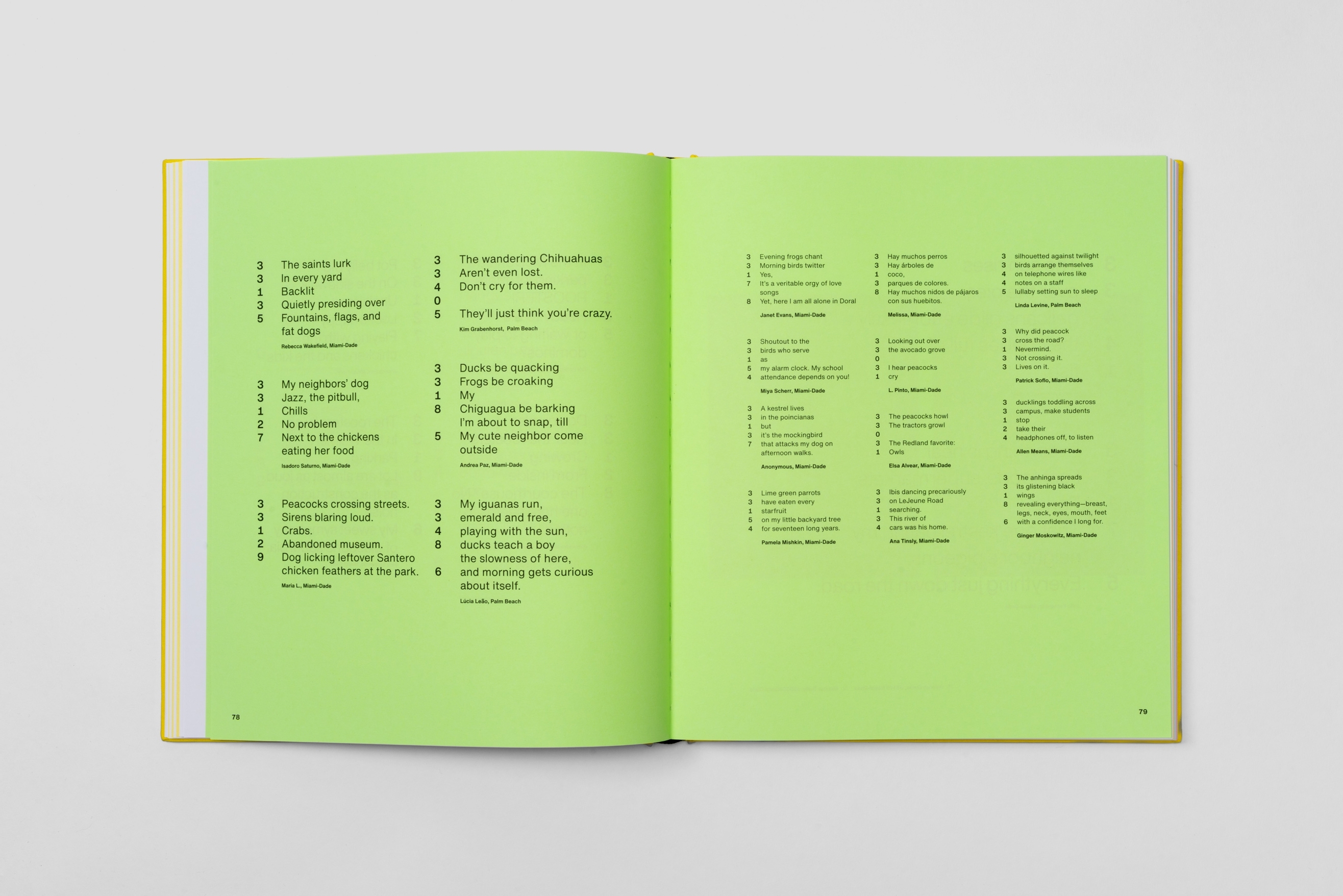
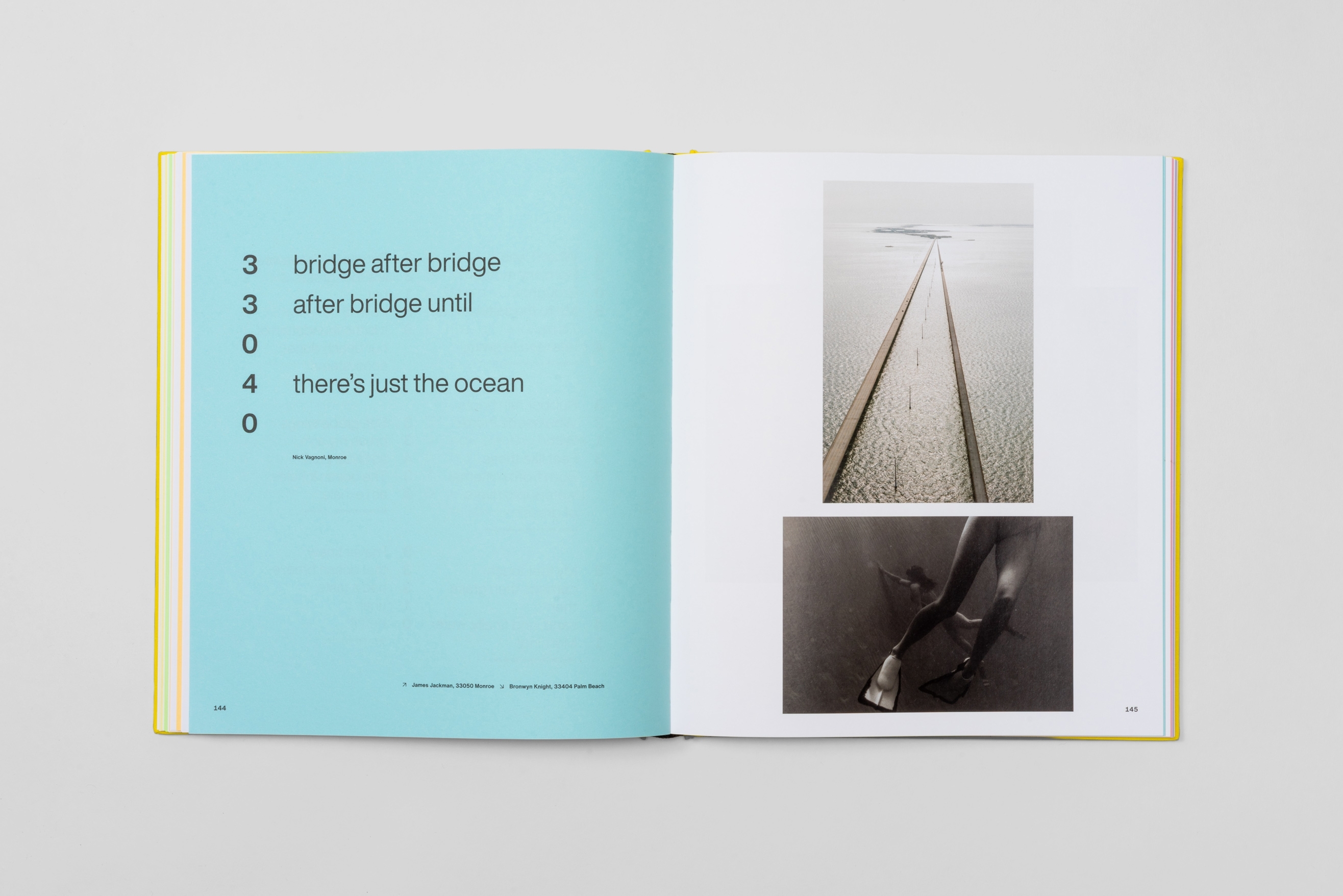
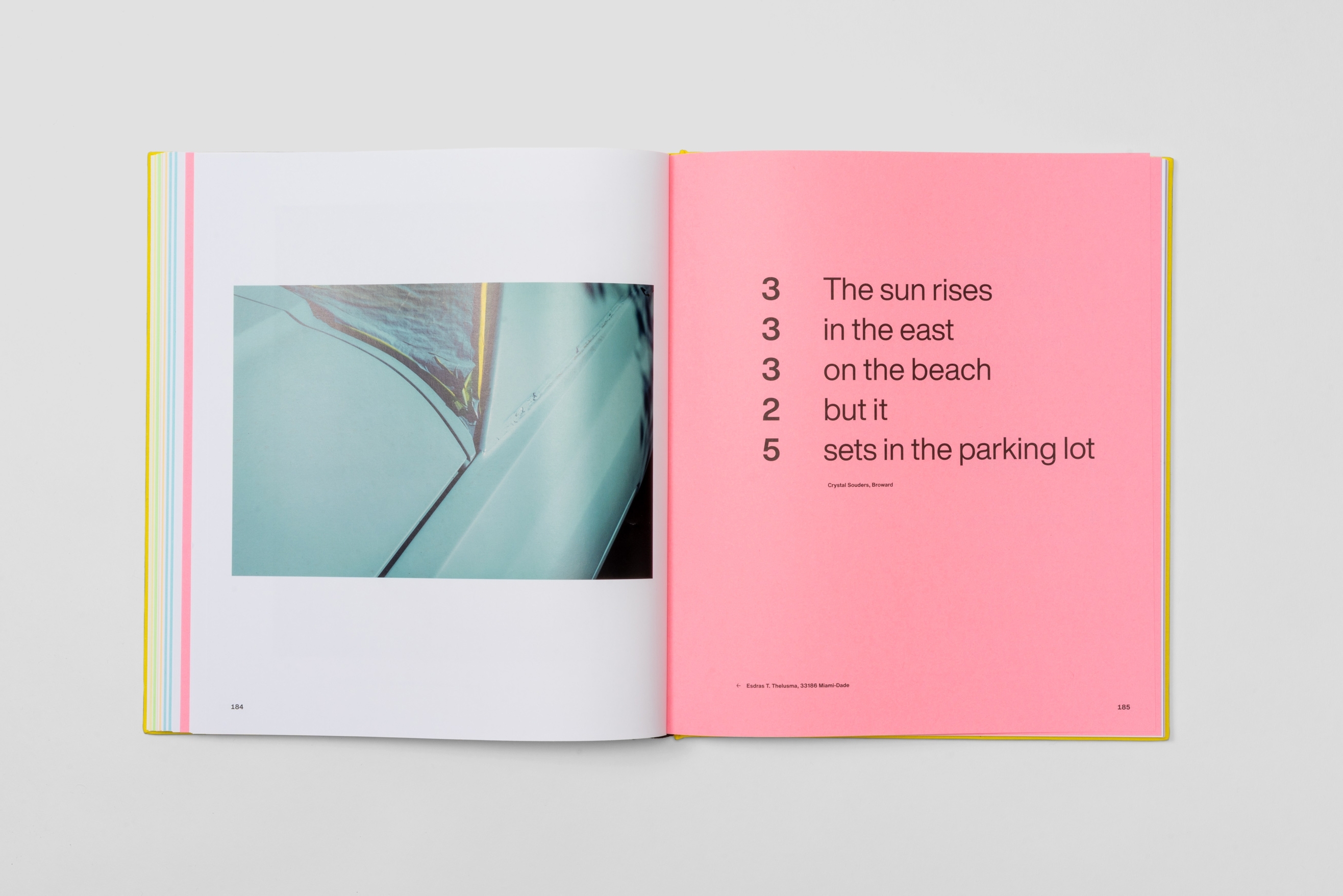
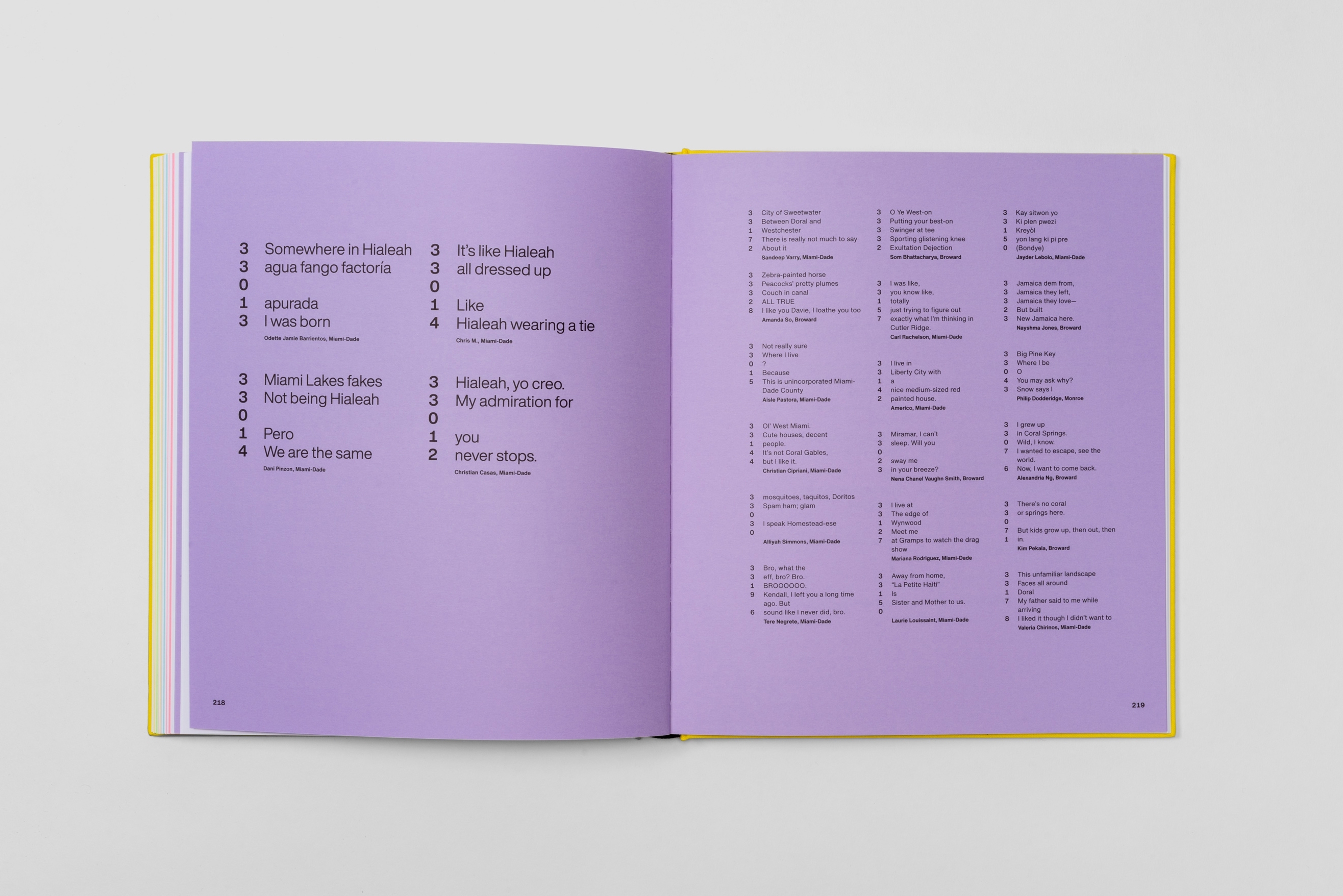
The ZipOde is a five-line poem shaped by where you live: write the digits of your zip code down the left side of a page, and let each number determine how many words appear on that line. A zero is a wild card — silence, a symbol, or anything in between. The constraint is tight but the feeling it produces is expansive: a whole neighborhood compressed into the geometry of an address.
Designing the book meant honoring the democratic spirit of the form. With contributions spanning more than 450 voices, no single poem or photograph could dominate. The design needed to hold multiplicity — to feel like a city rather than a single author.
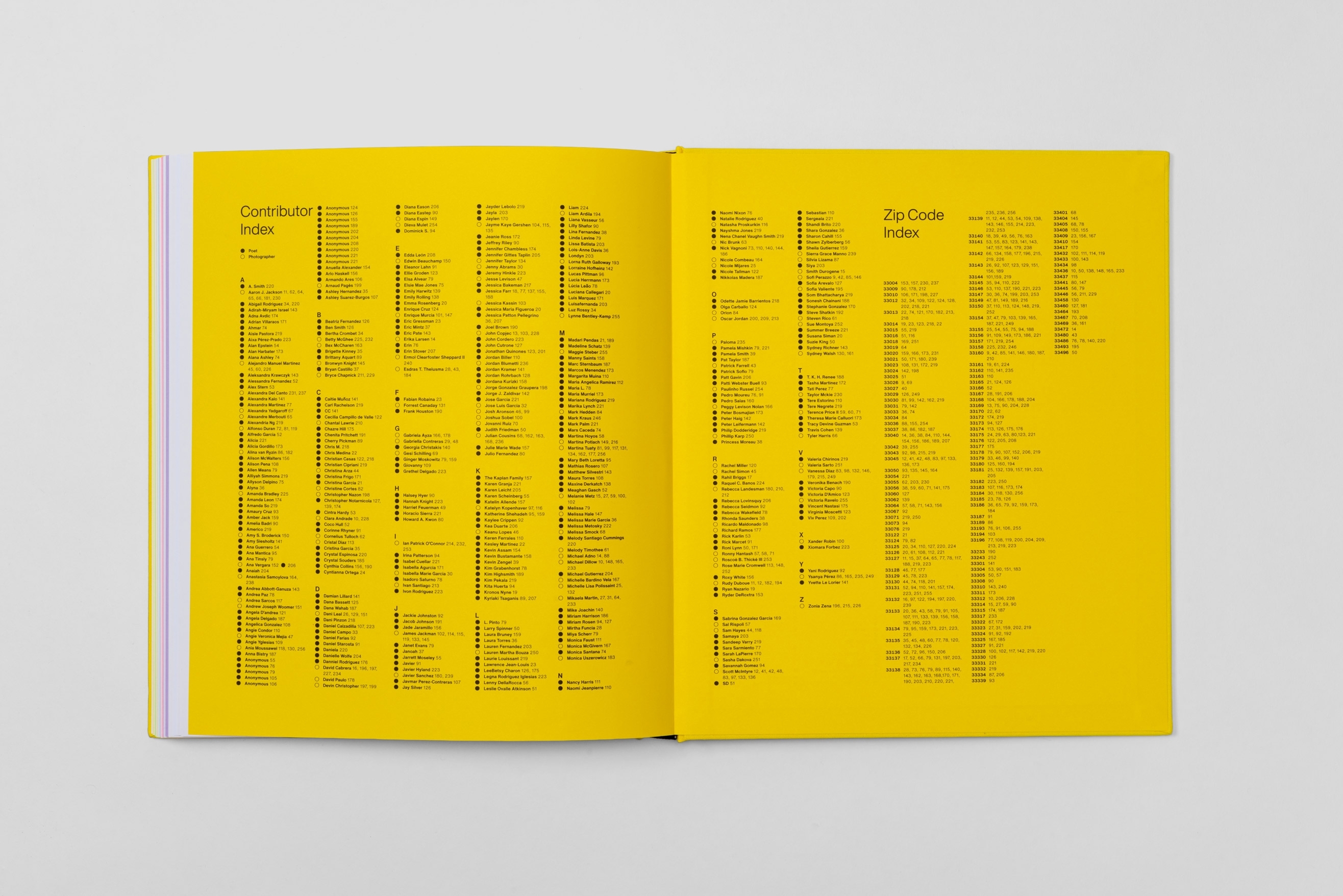
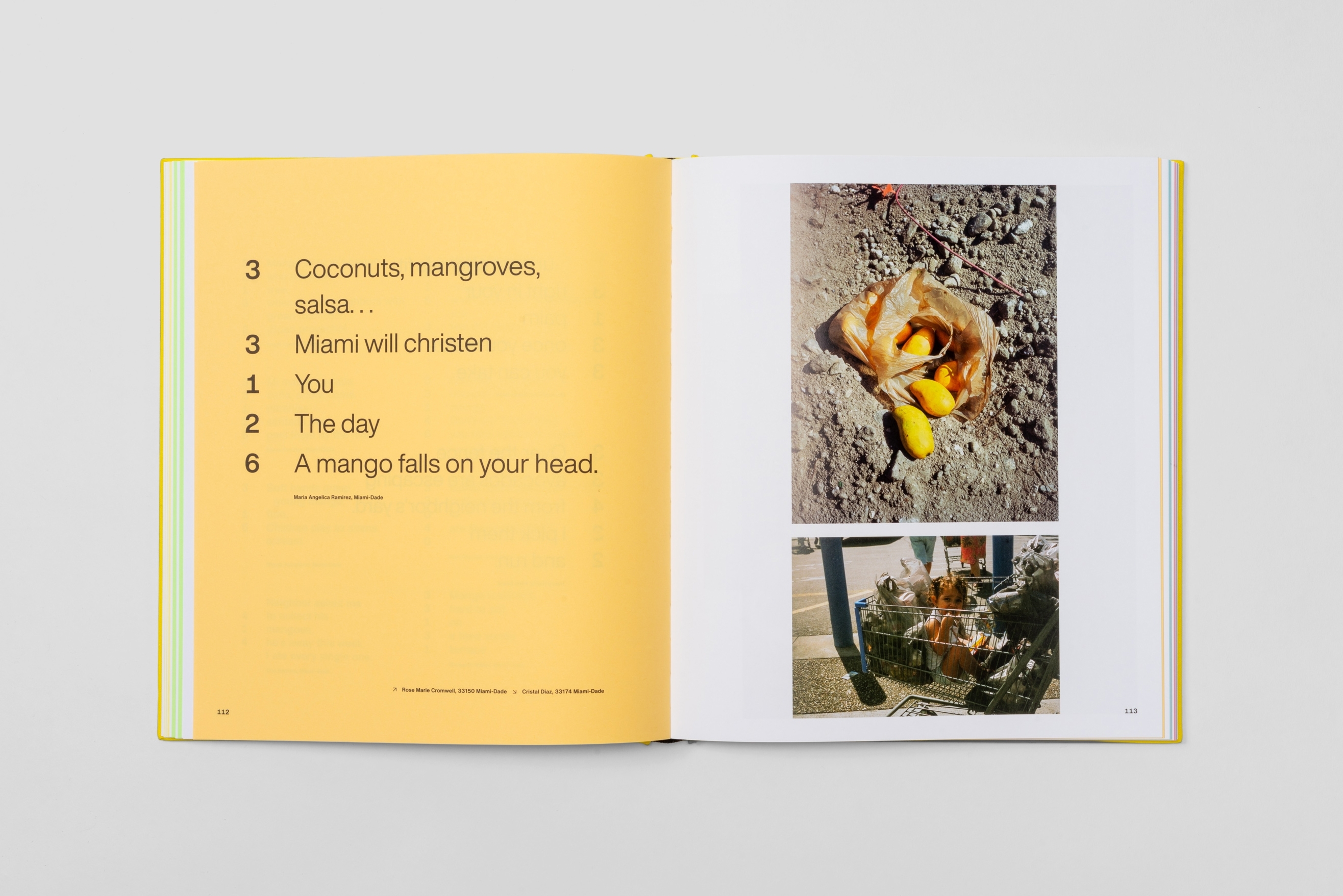
“We’ve begun to explore the value of ZipOdes as a collected, shared narrative. So far, we’ve learned a lot, like which neighborhoods have the most peacocks and which have the most chickens. [...] . We already knew that mangos are our city’s love language, but we’ve learned they rank high in petty theft, with dozens of ZipOde poets admitting to stealing neighbors’ mangos.”
Caroline Cabrera and Melody Santago Cummings
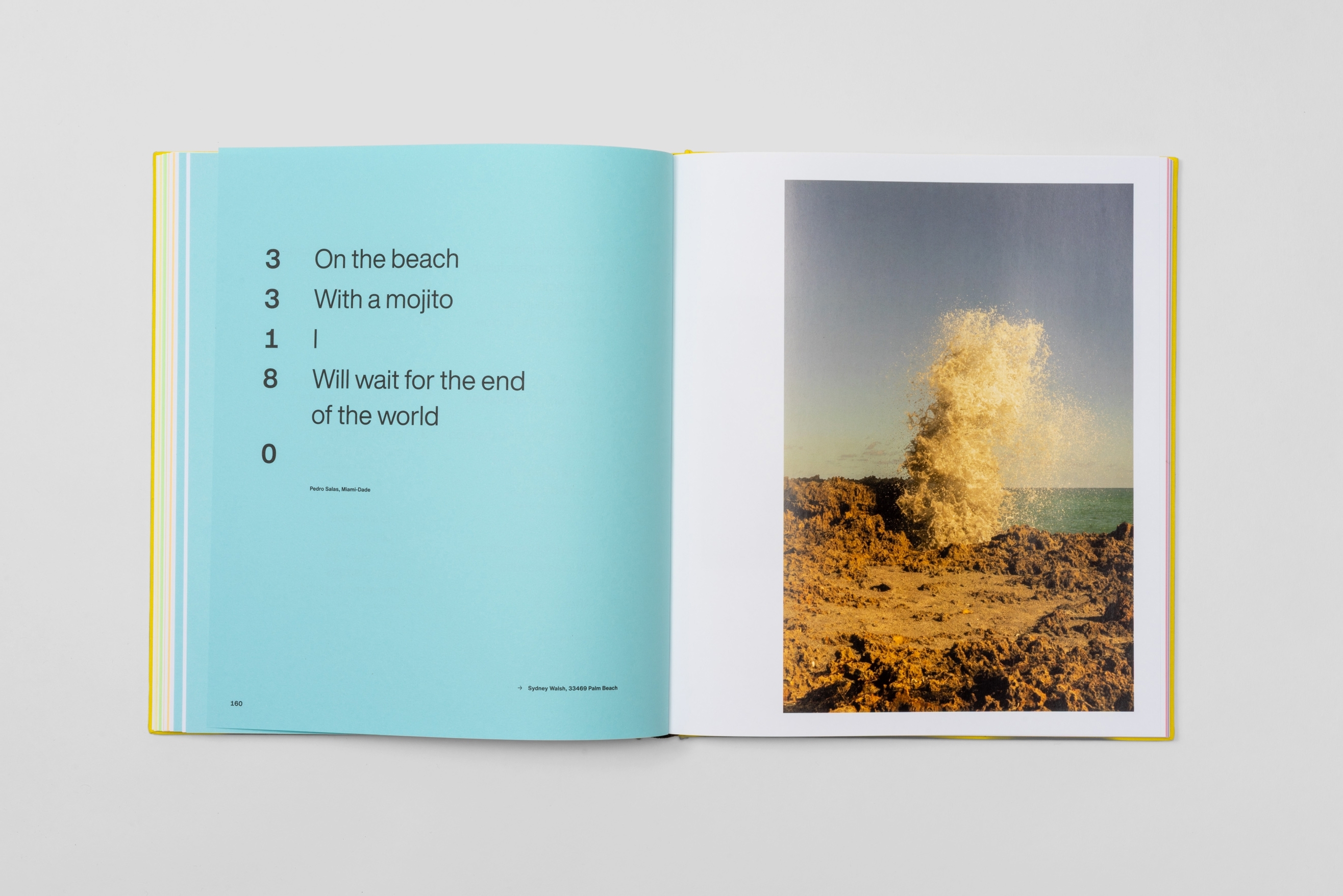
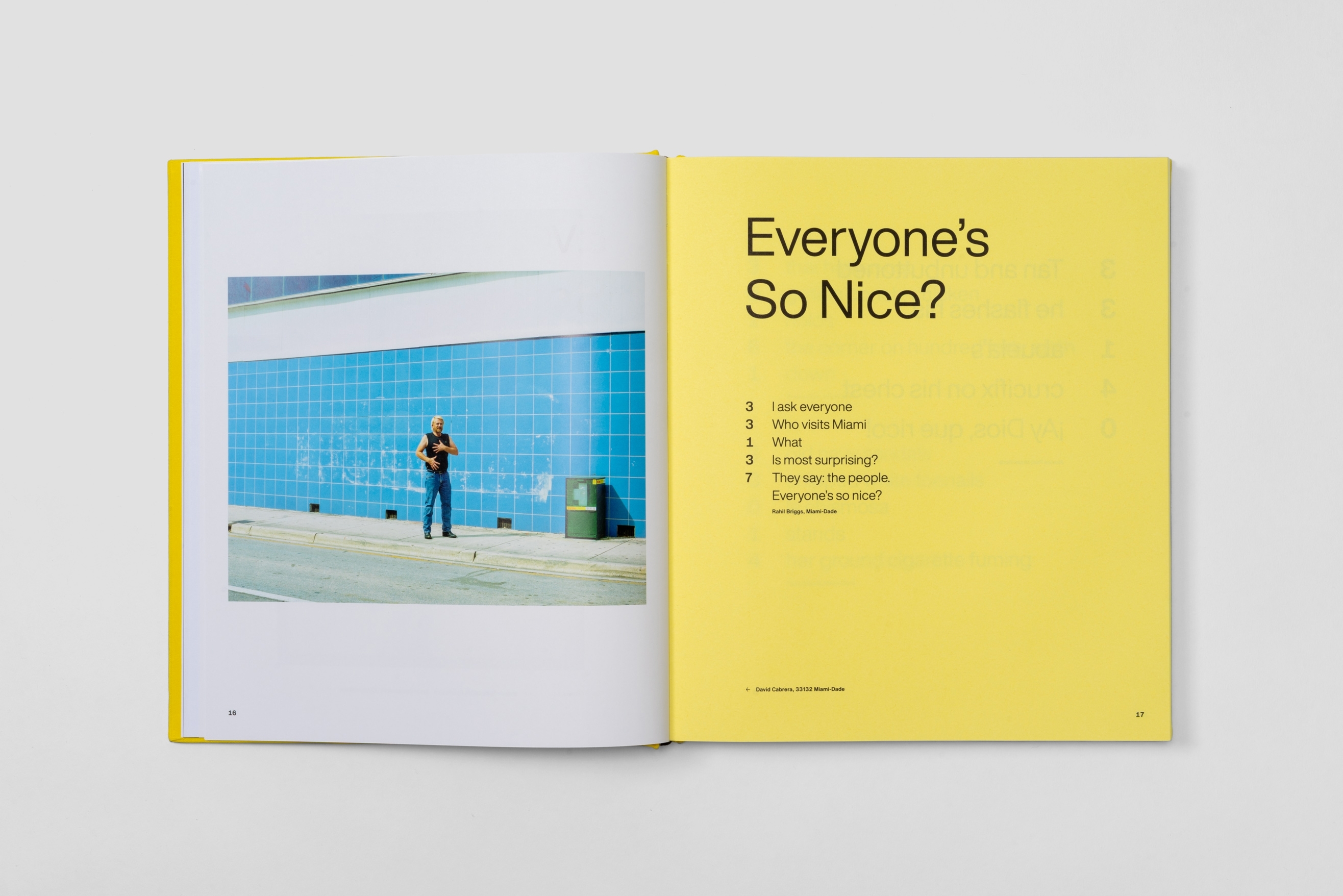
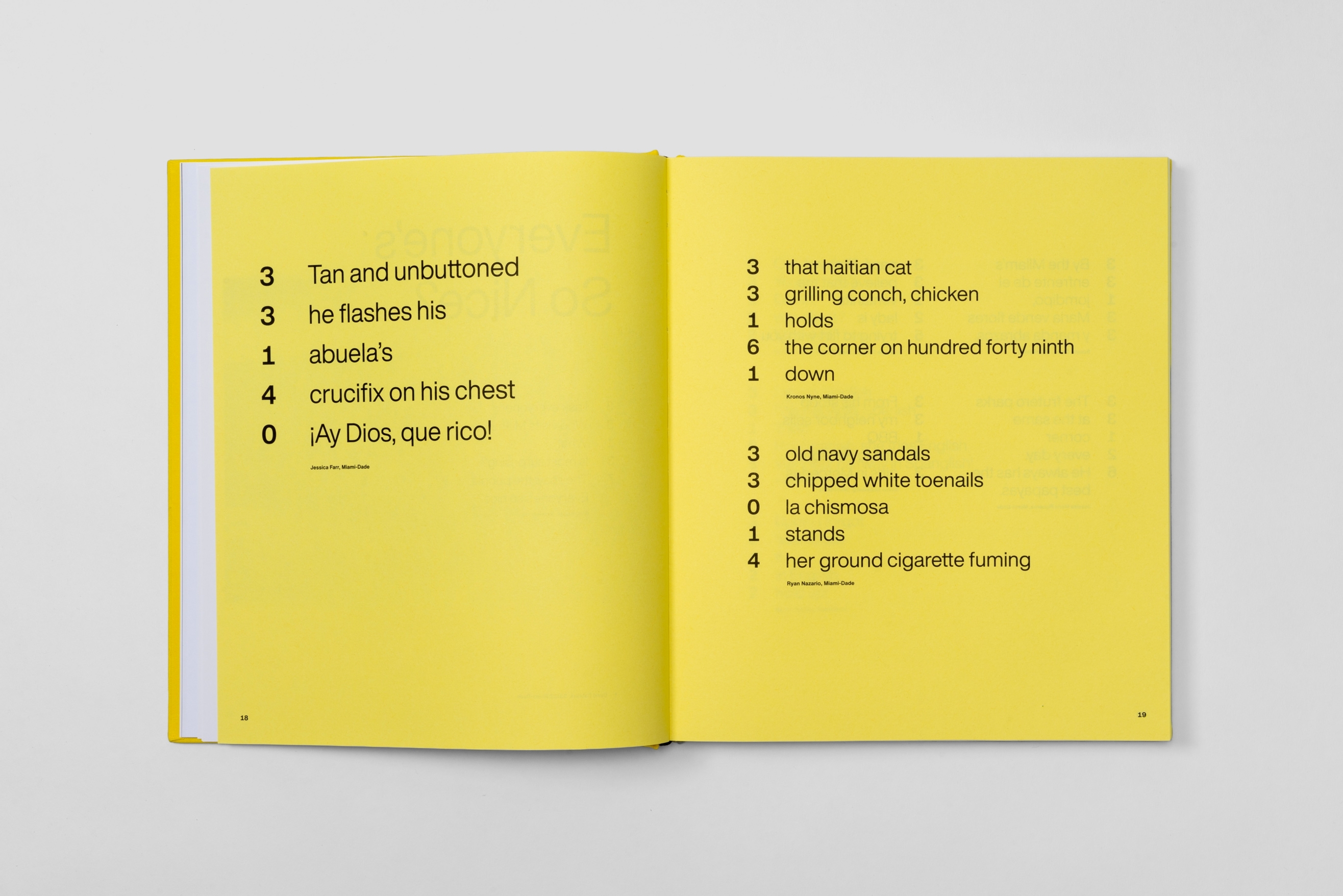
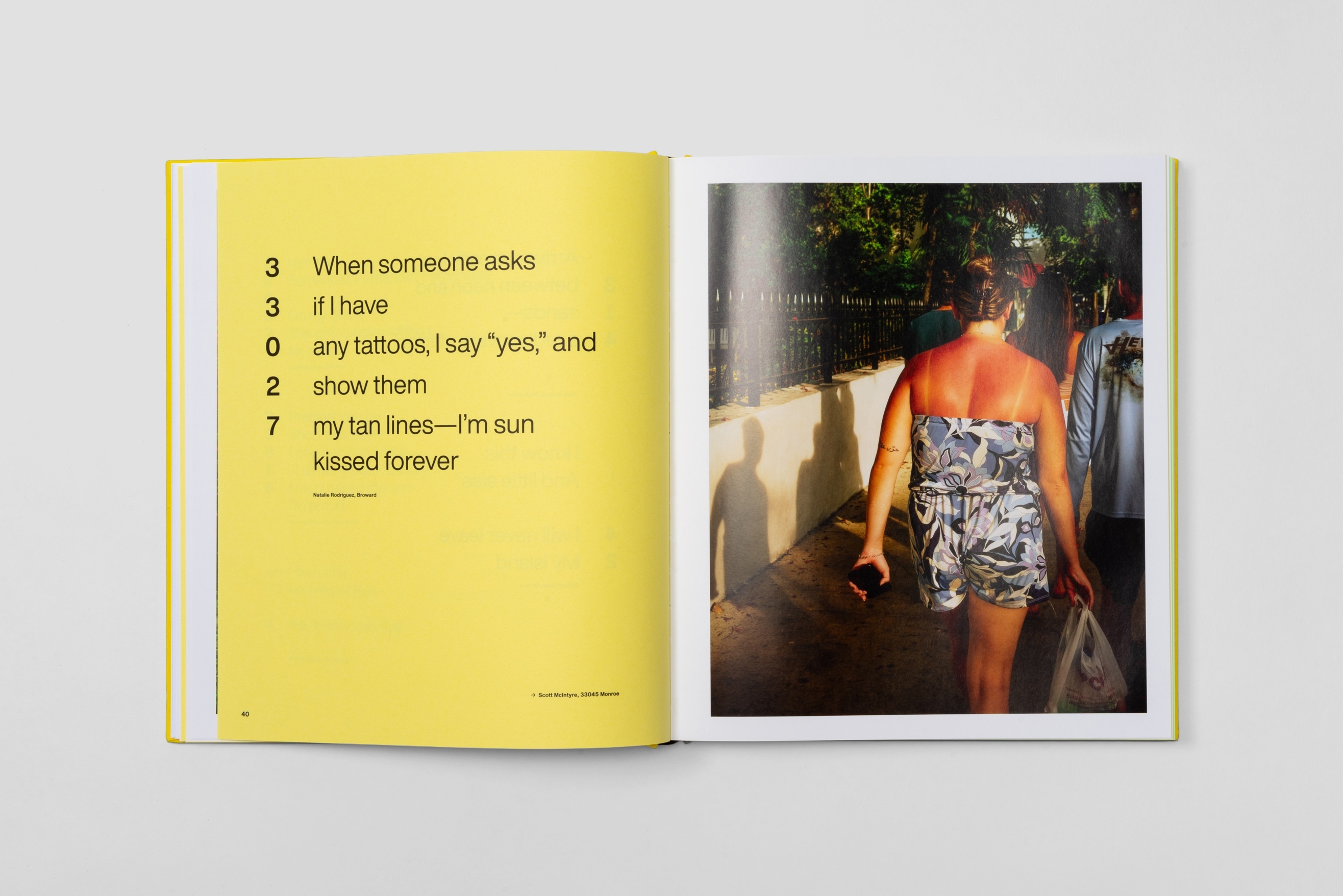
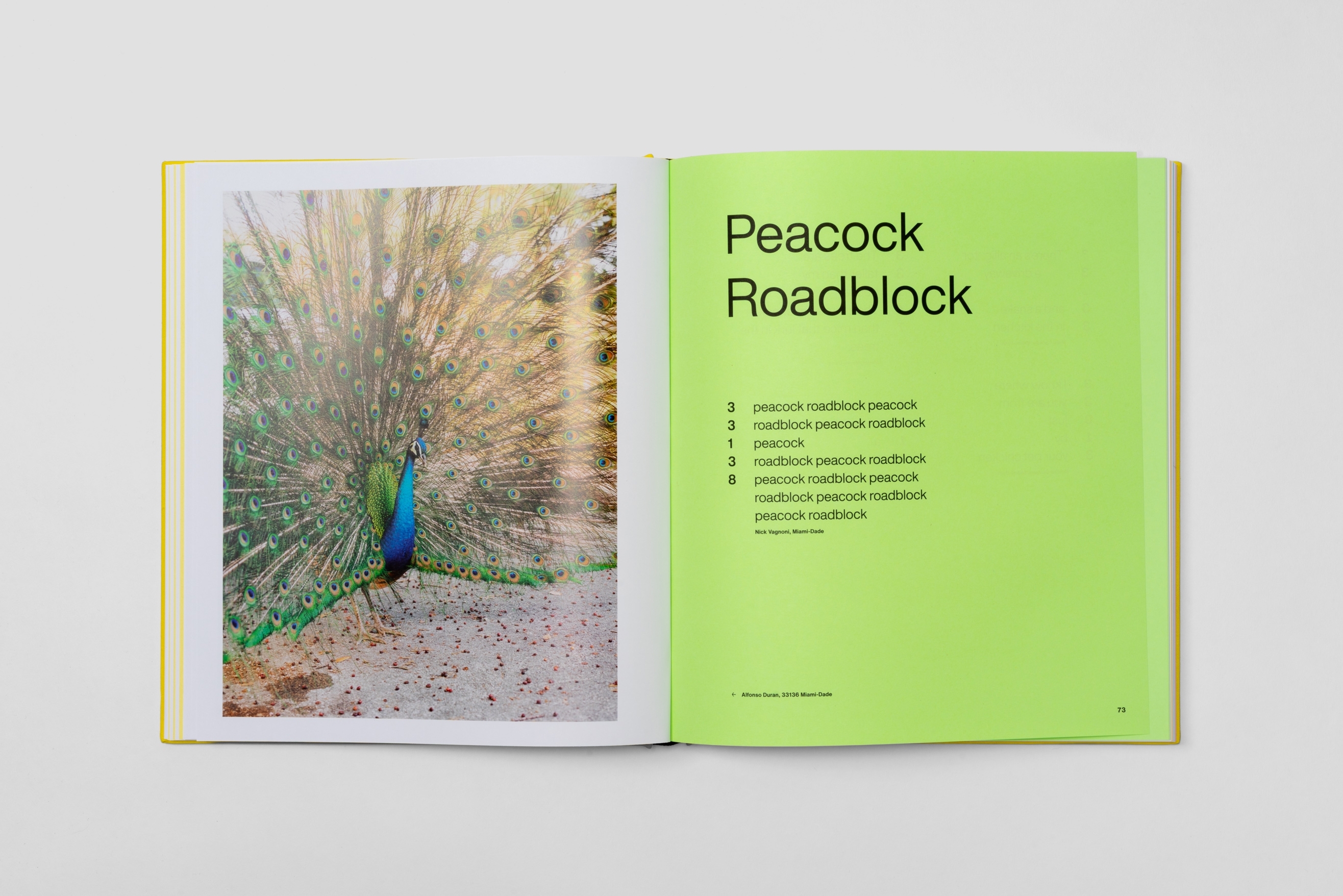
The book is organized thematically — People, Animals, Food, Place — letting poems and photographs find each other across zip codes and neighborhoods. The categories become a common grammar for a deeply heterogeneous place.
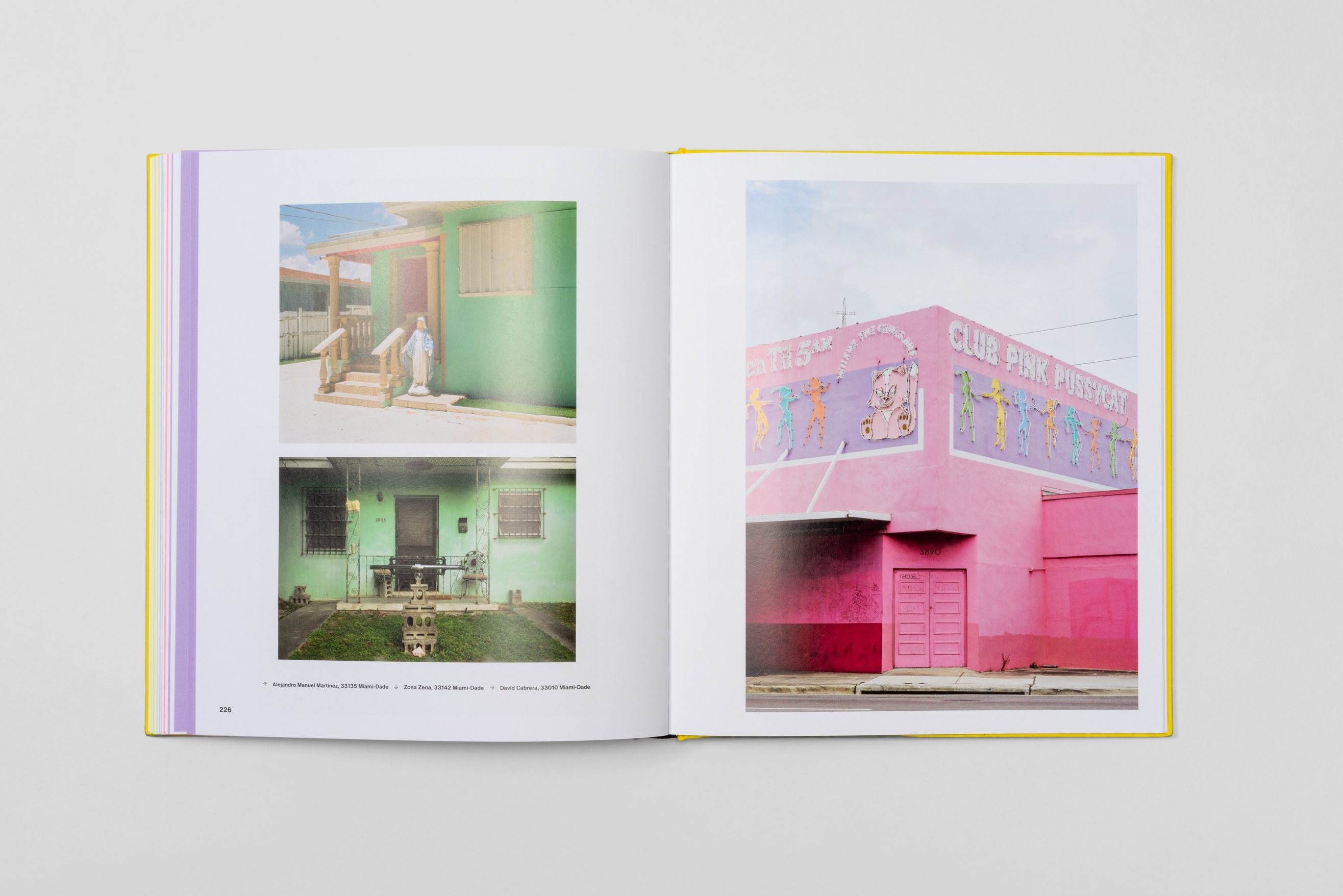
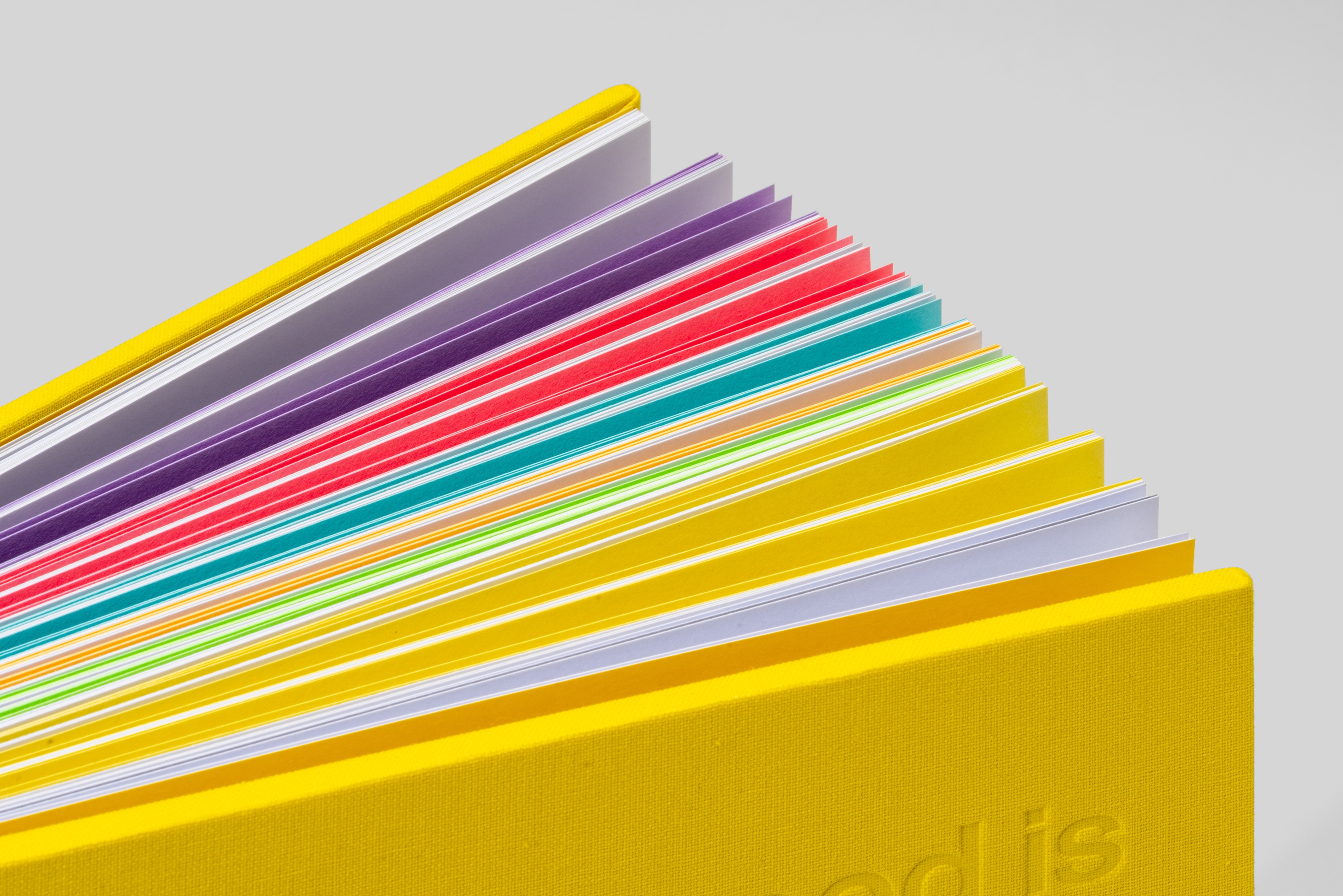
That dialogue between the verbal and the visual carries into the materials. Texts are printed on uncoated stock; poems on a colored uncoated sheet that sets them apart within the flow of the book. Every photograph is printed on dull coated paper. Moving through the book, the reader can feel the shift between registers — two ways of seeing, two ways of touching.